Tie-Down Installation: Xi2s & Straps
Tie-Down Installation for Arizona Manufactured & Mobile Homes – Call Desert Mobile Home Services for Inspections, Repairs, and New Tie Downs
Proper tie-down installation is one of the most important steps in protecting a structure from wind, movement, and everyday loads. Whether you are working with Xi2s, vertical tie downs, or heavy-duty straps, understanding how these components work together helps ensure a safer, longer-lasting build. And when Arizona homeowners need tie-down inspections, repairs, or new installations for manufactured or mobile homes—especially to satisfy a home inspection or lender requirement before closing—Desert Mobile Home Services is ready to help.
Why Tie-Down Installation Matters
Tie-down systems are designed to create a continuous load path from the roof all the way down to the foundation. When installed correctly, they help a structure resist uplift, racking, and sliding forces caused by wind, seismic activity, and everyday use. Poor or incomplete installation can leave vulnerable weak points that may not be obvious until a storm or heavy load puts the building to the test.
A complete system typically includes Xi2s connectors, vertical tie downs, and compatible straps, all working together to anchor walls, floors, and roofs securely to the foundation or supporting structure.
Understanding Xi2s in Your Tie-Down System
Xi2s are engineered tie-down devices designed to transfer loads efficiently between framing members. In many applications, they are used at key connection points where walls meet foundations or where multiple stories stack on top of one another. Their role is to “collect” forces from the structure above and deliver them safely to the structural elements below.
When planning Xi2s installation, pay close attention to:
Location: Place Xi2s at specified studs, posts, or columns where loads are concentrated, following the project drawings or manufacturer layout.
Fasteners: Use only the approved nails, screws, or anchors, and install the required quantity in each pre-punched hole pattern.
Alignment: Ensure Xi2s sit flush against framing, with no gaps or twists that could reduce their capacity under load.
💡 Pro Tip: Before fastening, dry-fit each Xi2s to confirm it lines up with the vertical strap path and anchor points below.
Vertical Tie Downs: Creating a Continuous Load Path
Vertical tie downs are the backbone of a secure tie-down system. Running from upper framing members down to lower levels, they connect floors, walls, and foundations into a single, integrated system. In high-wind or multi-story applications, vertical tie downs are especially important because they help prevent upper levels from lifting or shifting independently of the structure beneath them.
During installation, confirm that each vertical tie down:
Runs straight and unobstructed between designated connection points, without sharp bends or kinks.
Is properly tensioned or fastened so it will engage immediately when loads are applied.
Interfaces cleanly with Xi2s, hold-downs, or foundation anchors to maintain a direct path for forces to travel.
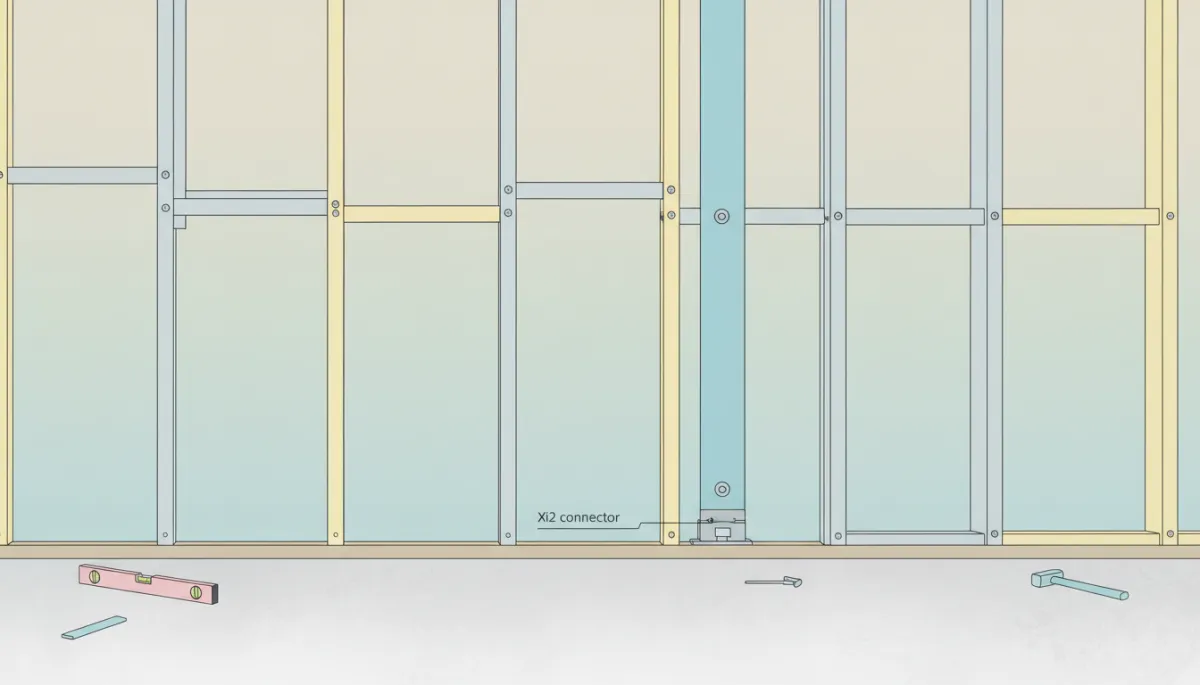
A straight, unobstructed vertical tie down helps maintain a reliable load path from roof to foundation.
Choosing and Installing Straps Correctly
Straps are the flexible connectors that link Xi2s and vertical tie downs to the framing itself. Available in a range of widths, thicknesses, and load ratings, they must be selected to match both the design requirements and the components they connect. Using the wrong strap—or installing it incorrectly—can compromise the entire tie-down system.
When working with straps:
Match capacity: Confirm the strap’s load rating meets or exceeds the design loads and is compatible with the Xi2s and anchors used.
Follow nailing patterns: Fill every required nail or screw hole as specified, avoiding over- or under-fastening.
Avoid damage: Do not bend straps sharply, cut them short, or drive fasteners so aggressively that they distort the metal.
📌 Key Takeaway: Treat straps as structural elements, not just accessories—every hole, bend, and connection affects performance.
Bringing It All Together for a Safer Structure
Successful tie-down installation is about more than fastening a few brackets. It requires a clear plan, correct placement of Xi2s, carefully aligned vertical tie downs, and properly selected and installed straps. When these elements work together, they create a robust, continuous load path that helps protect the building—and everyone inside it—when it matters most.
By taking a deliberate, detail-focused approach to each step, you transform individual components into a cohesive tie-down system that delivers strength, reliability, and long-term peace of mind.
Schedule an inspection or request an estimate today!
📞Call us at +1 (833) 922-2257
📧Email:[email protected]
🌐Visit:https://desertmobilehomeservices.com
