
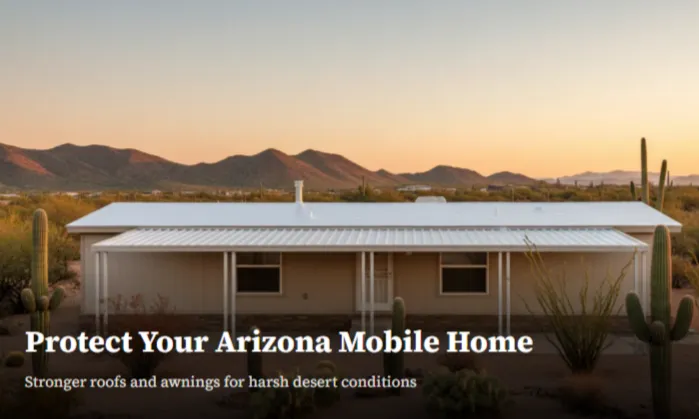
Roof Coatings & Awnings for Arizona Mobile Homes
For Arizona mobile home owners, a solid roof coating and strong awning column supports are more than just upgrades—they are basic protection against the desert. They help keep your home cooler, reduce the risk of leaks, and make your outdoor spaces safer and more comfortable. By paying attention to the concerns inspectors commonly find, and by fixing the problems desert mobile home services see every day, you can stay ahead of costly damage and enjoy peace of mind through every season.
Why Roof Coatings Matter in the Arizona Desert
Arizona sun is no joke. Day after day, your mobile home roof takes direct heat, UV rays, and blowing dust. Over time, factory finishes dry out, seams open up, and tiny cracks appear around vents and edges. You may not notice anything from the ground, but inside you start feeling hotter rooms, higher electric bills, or small brown spots on the ceiling after a storm.
A good roof coating adds a protective layer that reflects heat, seals hairline cracks, and helps keep water out. For many Arizona mobile homes, especially older ones, a fresh coating can extend the life of the roof and delay the need for a full replacement. It is a common fix desert mobile home services recommend after inspections, particularly when they see dried sealant, chalky roof surfaces, or early signs of leaks around roof penetrations.
Common Roof Concerns Found During Mobile Home Inspections
When a desert mobile home specialist climbs up to inspect your roof, they are usually looking for a familiar list of Arizona-specific issues:
Dried and cracked sealant around vents, skylights, and roof edges from years of UV exposure.
Soft spots or spongy areas where water has slowly seeped in after monsoon storms.
Peeling or chalky roof surfaces that no longer reflect heat the way they should.
Improper drainage, where water ponds in low spots instead of running off quickly.
These are the kinds of problems desert mobile home services fix every week. Often, the solution is cleaning the roof, repairing damaged areas, resealing seams, and then applying a high-quality reflective roof coating designed for Arizona heat. Addressing these issues early helps prevent interior damage and keeps your cooling system from working overtime.
The Role of Column Supports for Awnings
For many Arizona mobile homeowners, the awning is where life happens—morning coffee, evening shade, and a cooler place to sit outside. Those metal columns holding up your awning do more than just look nice. They carry the weight of the structure and help it stand up to wind, rain, and the occasional dust storm that blows through the park.
Over time, supports can rust at the base, shift in the soil, or loosen where they attach to the awning beam. In some older parks, columns were never properly anchored to concrete, or the pads have cracked and settled. Desert mobile home services are often called out after a storm when a homeowner notices a leaning post, sagging awning, or unusual movement when the wind picks up.
Common Awning and Column Issues Arizona Homeowners Face
During awning inspections, technicians usually check each column support from top to bottom. Some of the most frequent problems they find include:
Rust and corrosion at the base of columns where water from sprinklers or monsoon runoff collects.
Loose fasteners where the awning beam connects to the home or to the posts, sometimes caused by years of vibration and wind.
Leaning or bowed supports from soil movement, older installations, or minor storm damage that was never corrected.
Cracked concrete pads that no longer provide a stable base for the columns.
These are not just cosmetic issues. A weakened column support can put stress on the awning roof, create gaps where water can get in, or in severe cases, lead to partial collapse during a strong wind. That is why many Arizona mobile home owners schedule regular awning inspections, especially after monsoon season or if they notice any changes in how the awning looks or feels.
Arizona-Specific Challenges: Heat, Monsoons, and Dust
Arizona’s climate is tough on mobile homes. Long stretches of triple-digit heat dry out roofing materials and sealants. Sudden monsoon storms hit with heavy rain, wind, and blowing debris. Dust works its way into tiny gaps and can hold moisture against metal, speeding up rust. All of this puts extra pressure on both your roof coating and your awning column supports.
Desert mobile home services are used to these conditions. They know where roofs typically fail first in this environment and which types of coatings hold up best under Arizona sun. They also understand how to install and reinforce awning supports so they can handle local wind patterns and soil conditions. Working with someone who understands these desert-specific issues can make a big difference in how long your repairs last.
Simple Steps to Protect Your Roof and Awnings
You do not have to wait for a leak or a leaning post to take action. A few simple habits can help Arizona mobile homeowners stay ahead of problems:
Walk around your home after big storms and look for sagging awnings, new stains, or damaged trim.
Check for ceiling discoloration inside, especially near roof edges, vents, and under awnings.
Have a professional inspection done every few years to review your roof coating, seals, and column supports.
Ask about reflective coatings and upgraded supports designed specifically for desert mobile homes.
A Safer, Cooler Home Starts at the Top
Call us today and get an estimate!
📞Call us at +1 (833) 922-2257
📧Email:[email protected]
🌐Visit:https://desertmobilehomeservices.com
