
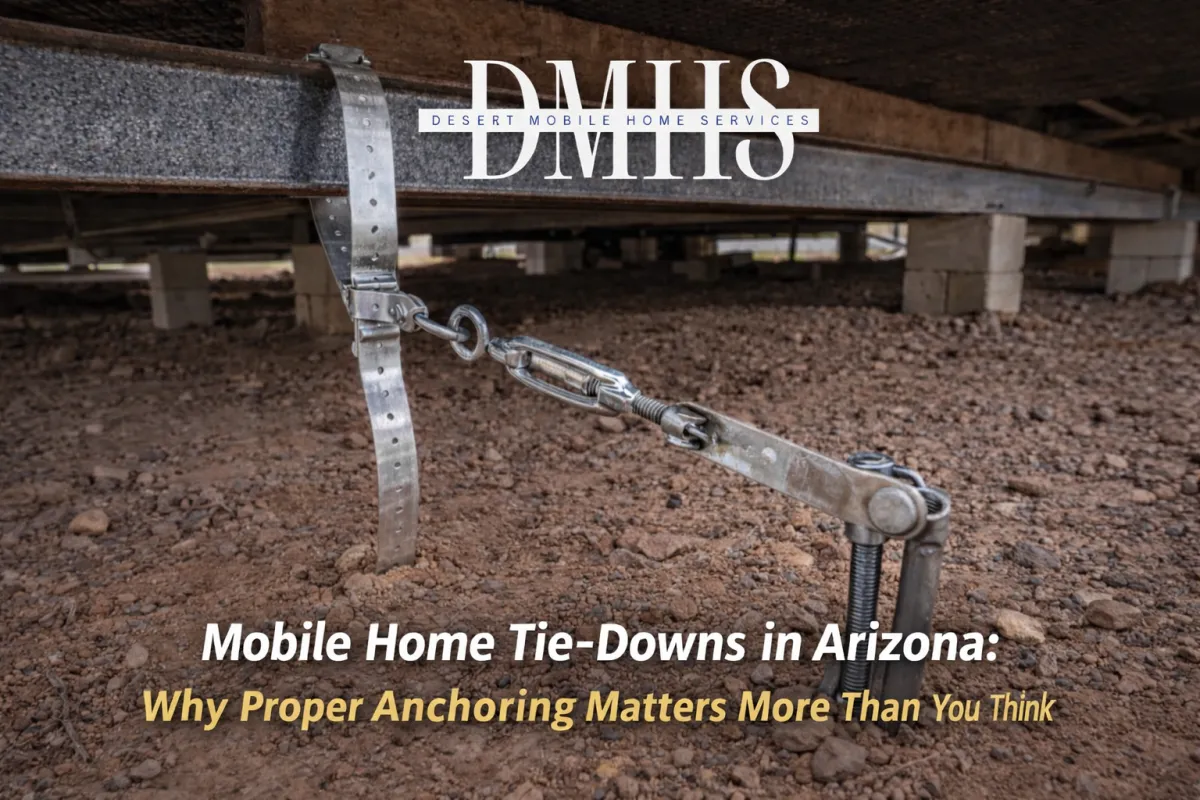
Mobile Home Tie-Downs in Arizona: Why Proper Anchoring Matters More Than You Think
Mobile Home Tie-Downs in Arizona: Why Proper Anchoring Matters More Than You Think
Strong winds, shifting soil, and seasonal storms are a reality for mobile homeowners across Arizona. One of the most critical—but often overlooked—systems protecting a mobile home during these conditions is the tie-down system. Proper tie-downs keep your home anchored, stable, and compliant with safety standards.
When tie-downs are missing, loose, or improperly installed, the risk to your home increases significantly. Understanding how they work and why they matter can help you avoid serious structural damage and costly repairs.
What Are Mobile Home Tie-Downs?
Tie-downs (also called anchors) are steel straps and ground anchors designed to secure a mobile or manufactured home to the ground. They work by holding the home firmly in place, resisting uplift and lateral movement caused by wind or soil shifts.
There are several types of tie-down systems, including:
Over-the-top tie-downs that wrap over the frame or roof
Frame anchors attached directly to the home’s steel chassis
Concrete or ground anchors suited for different soil conditions
The right system depends on your home’s design, location, and local regulations.
Why Tie-Downs Are Especially Important in Arizona?
Arizona may not experience hurricanes, but high winds, monsoon storms, and dry, shifting soil still pose serious risks. Without proper anchoring, mobile homes can shift out of level, stress plumbing and electrical connections, and even suffer frame damage.
Well-installed tie-downs help:
Prevent movement during high winds
Reduce stress on the frame and supports
Maintain proper leveling
Improve overall structural stability
Meet HUD and local code requirements
In many cases, tie-down issues aren’t visible unless a crawl space inspection is performed.
Signs Your Tie-Downs May Need Attention
Many homes have aging or outdated tie-down systems. Warning signs include:
Loose or missing straps
Rusted or corroded anchors
Uneven floors or doors that no longer close properly
Visible movement after storms
Tie-downs that don’t meet current standards
If your home has been relocated, re-leveled, or hasn’t been inspected in years, it’s especially important to have the system checked.
What Can Happen Without Proper Tie-Downs?
Ignoring tie-down problems can lead to:
Frame stress and structural shifting
Damage to plumbing and ductwork
Higher repair costs after storms
Insurance or compliance issues
Safety risks for occupants
In severe cases, inadequate anchoring can make a home unsafe during high-wind events.
How We Inspect and Install Tie-Down Systems
The process starts with a full crawl space inspection to evaluate existing anchors, straps, and soil conditions. From there, we determine whether the system can be adjusted, reinforced, or needs replacement.
Our approach includes:
Verifying anchor spacing and placement
Checking strap tension and attachment points
Ensuring compliance with engineering and HUD standards
Installing anchors suited for Arizona soil
Securing and tensioning the system for long-term stability
Every installation is done with safety, durability, and local conditions in mind.
Secure Your Home From the Ground Up
Tie-downs aren’t just a code requirement—they’re a key part of protecting your home and everyone inside it. A properly anchored mobile home is better equipped to handle Arizona’s weather and soil challenges year after year.
If you’re unsure about the condition of your tie-down system, a professional inspection can provide clarity and confidence. Rely on Desert Mobile Home Services for your Mobile Home Tie-Down Inspections & Installation. Our team follows engineering requirements and HUD standards to help with safety, resale, and refinancing.
Take Action Today!
📞 Call us at +1 (833) 922-2257
📧 Email: [email protected]
🌐 Visit: https://desertmobilehomeservices.com
