
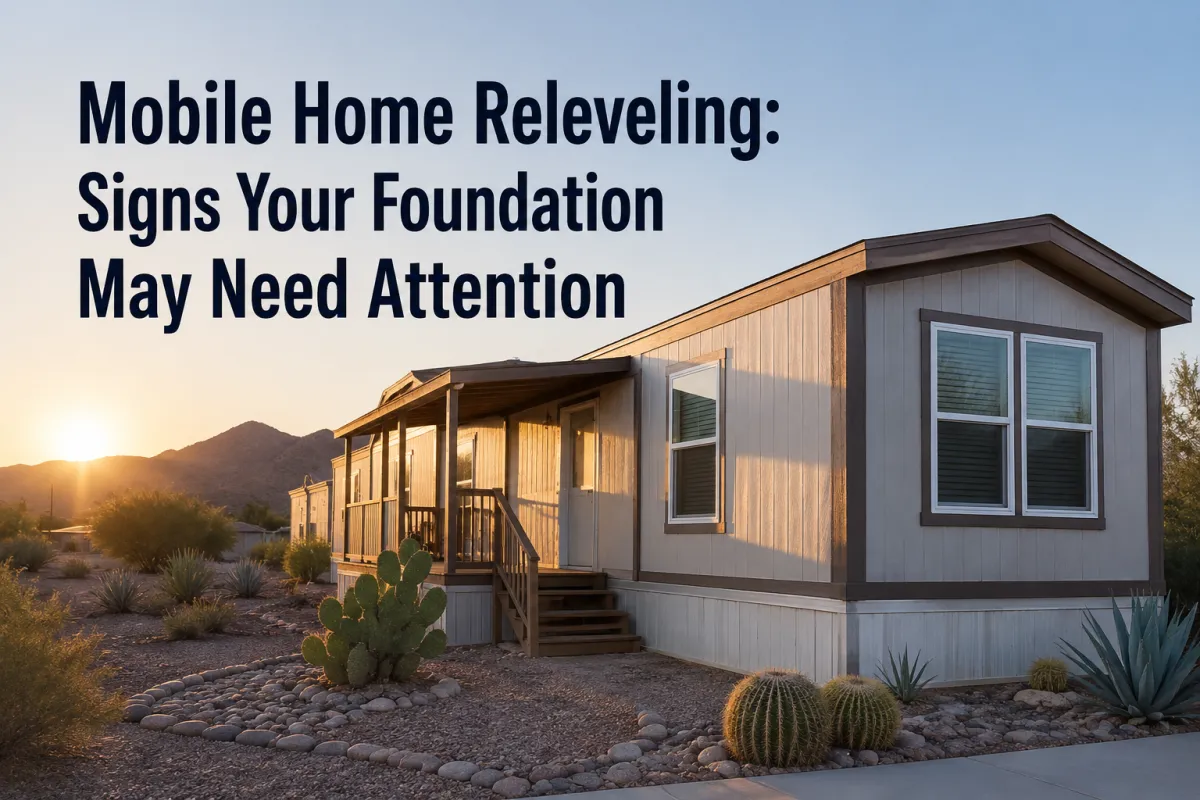
Mobile Home Releveling: Signs Your Foundation May Need Attention
Sometimes the first sign is something small—a door that suddenly sticks, a floor that feels uneven, or a new crack in the wall. Other times, you may notice movement or hear noises coming from underneath the home.
That’s where mobile home releveling may be needed.
At Desert Mobile Home Services, we work with mobile and manufactured homes throughout Arizona, helping homeowners identify foundation and support issues before they become bigger and more expensive problems.
Your home is supported by a system of piers, blocks, pads, and other components underneath it. Over time, those supports can shift or settle, causing parts of the home to sit higher or lower than they should.
During a releveling job, the home may be carefully lifted with hydraulic jacks so the support system can be adjusted and the home brought back to the proper level. The goal isn't simply to make the floor feel level. A relevel inspection looks at the overall support system underneath the home.
Why Do Mobile Homes Shift in Arizona?
Arizona homeowners deal with some unique conditions that can affect manufactured homes.
1. Arizona's Dry Soil
Long periods of heat and dryness can cause soil conditions around the home to change. When the supporting ground changes, the piers underneath the home can settle or shift.
2. Monsoon Rain
Then comes monsoon season.
Heavy rainfall can saturate areas of soil that have been extremely dry for months. Water movement around the home can contribute to changes in the ground supporting the foundation system.
3. Age of the Home
Older mobile homes may have support systems that have been in place for decades. Even if everything was installed correctly originally, components can shift, settle, or require adjustment over time.
4. Changes Underneath the Home
Plumbing leaks, erosion, drainage problems, or other changes in the crawl space can also affect the area around the supports.
Signs Your Mobile Home May Need Releveling
Your home doesn't always announce a foundation problem with a dramatic crack.
Sometimes, the warning signs are subtle.
Look for:
Doors or windows that suddenly stick
Doors that no longer close properly
Uneven or sloping floors
Gaps appearing around doors or windows
New cracks in walls or ceilings
Cracks around drywall joints
Floors that feel unusually soft or uneven
Cabinets or countertops that appear out of level
New gaps between walls, floors, or trim
Unusual movement when walking through the home
Piers or supports underneath the home that appear shifted
New noises or popping sounds coming from the home
Why Ignoring a Leveling Problem Can Get Expensive
It's easy to put off a problem when the home is still livable.
You might think:
"It's just one door that's sticking."
But if the underlying issue is related to the home's support system, waiting may allow the problem to develop further.
A home that isn't properly supported can potentially experience additional stress on floors, walls, doors, windows, plumbing connections, and other components.
The sooner you understand what's happening underneath your home, the easier it can be to decide what needs to be done.
Does Your Mobile Home Need Releveling or Something Else?
This is an important question.
Not every uneven floor or sticking door means the entire home needs to be releveled.
There could be another issue underneath the home, such as:
Damaged or shifted piers
Problems with supports
Plumbing leaks
Crawl space issues
Soil movement
Structural damage
Drainage or water-related problems
That's why we don't recommend guessing based only on what you can see inside the home.
At Desert Mobile Home Services, we work specifically with mobile and manufactured homes, so we know that sometimes the real story is underneath the house.
What Happens During a Mobile Home Releveling?
The exact process depends on the condition and construction of the home, but a professional assessment typically involves looking at the home and its support system to determine where adjustments may be needed.
For a releveling project, hydraulic jacks can be used to carefully raise portions of the home while the support system is adjusted.
A level is used to help determine whether the home is sitting properly.
The important part is not simply "making the floor level."
It's understanding why the home became out of level in the first place and making the appropriate adjustments to the support system.
How Much Does Mobile Home Releveling Cost in Arizona?
There's no one-size-fits-all price.
The cost can depend on:
Size and type of mobile home
How far the home has shifted
Number and condition of supports
Accessibility underneath the home
Whether damaged components need replacement
Location of the property
Additional crawl space or foundation issues
A small adjustment may be considerably different from a home requiring extensive support work.
That's why an evaluation is often the best place to start.
Arizona Homeowners: Don't Ignore What's Happening Underneath
Your mobile home may look perfectly fine from the outside while something underneath needs attention.
And in Arizona, where homes deal with intense heat, changing soil conditions, and seasonal storms, it's worth paying attention to the little signs.
That sticking door might be telling you something.
That uneven floor might be worth checking.
That new crack might not be something you want to ignore.
At Desert Mobile Home Services, mobile homes are what we work with every day. We can take a closer look at the home and its support system and help you understand what may be going on before you decide what comes next.
Need a Mobile Home Releveling in Arizona?
If your mobile home has uneven floors, sticking doors, new cracks, or other signs of movement, Desert Mobile Home Services can help you take a closer look.
We work with mobile and manufactured homes throughout Arizona and understand the unique challenges Arizona homeowners face.
Don't wait until a small warning sign becomes a bigger repair. Give us a call and let's take a look at what's happening underneath your home.
