Mobile Home Inspections: Safety & Durability
The Importance of Mobile Home Inspections: Protecting Your Home from the Ground Up
A mobile home is more than a structure on a lot—it’s your shelter, your investment, and often the place where your most important memories are made. Comprehensive mobile home inspections and repairs are essential to keeping that home safe, stable, and comfortable for years to come.
Why Mobile Home Inspections Matter So Much
Mobile and manufactured homes are engineered differently than site-built houses. They rely on a carefully designed support system, specialized tie-downs, and protective barriers beneath and around the home. When any of these components fail or wear out, the result can be uneven floors, moisture damage, pest problems, structural movement, and even safety hazards during storms or high winds.
A professional mobile home inspection looks far beyond what you can see from the front door. Inspectors examine the crawlspace, supports, tie-downs, skirting, roof, and drainage systems to catch small issues before they become major repairs. This not only protects your family’s safety, but also preserves the value and lifespan of your home, making inspections one of the smartest investments a homeowner can make.
Crawlspace Inspections: Where True Protection Begins
The crawlspace is the foundation of your mobile home’s health. It’s where moisture, pests, and structural problems typically begin—but it’s also the area most homeowners never see. A comprehensive crawlspace inspection includes checking the condition of the ground, supports, vapor barrier, ductwork, plumbing lines, and any signs of water intrusion, mold, or rot.
By identifying standing water, sagging ducts, damaged insulation, or failing support piers early, inspectors can recommend targeted repairs that prevent costly structural damage and poor indoor air quality. In many ways, a careful crawlspace inspection is the foundation of every other service your home may need.
Vapor Barrier Repair & Replacement: Guarding Against Ground Moisture
A vapor barrier is a heavy plastic sheeting laid on the ground beneath your mobile home. Its job is simple but critical: keep ground moisture from rising into the crawlspace, where it can lead to mold, wood rot, rusted metal components, and musty odors inside the home. Over time, vapor barriers can tear, shift, or deteriorate, especially if previous work has been done under the home without proper care.
During an inspection, professionals look for gaps, rips, or missing sections in the vapor barrier. If problems are found, they may recommend vapor barrier repair or a complete replacement. A properly installed barrier is carefully overlapped, secured, and fitted around piers and utilities, creating a continuous shield that keeps your home drier, healthier, and better protected from long-term moisture damage.
Support Piers Installation & Adjustments: Keeping Your Home Steady
Support piers are the backbone of your mobile home’s structure. These concrete or steel supports bear the weight of the home and distribute it evenly along the frame. If piers are misaligned, deteriorated, or not properly shimmed, you may notice doors that don’t close, windows that stick, cracks in walls, or soft spots in the floor—all signs the home is out of balance.
Professional inspectors check each pier for correct placement, condition, and load-bearing performance. When necessary, they can install new support piers or adjust existing ones, adding or replacing shims to bring the home back into proper alignment. This not only improves comfort and function, but also reduces stress on the home’s frame and structure, helping prevent more serious damage over time.
Releveling and Level Adjustments: Fixing Uneven Floors and Structural Stress
Over the years, soil movement, erosion, and settling can cause a mobile home to shift out of level. Releveling is the process of carefully bringing the home back to an even, stable position. This is done using specialized tools to adjust support piers and shims in small, controlled increments, protecting the integrity of the frame and interior finishes while correcting the imbalance.
Level adjustments can resolve a host of everyday annoyances—like sloping floors, gaps under doors, or cabinets that don’t hang straight—while also reducing structural stress that can lead to cracks and leaks. A good inspection will identify whether your home needs a full relevel or minor adjustments to maintain long-term stability and comfort.
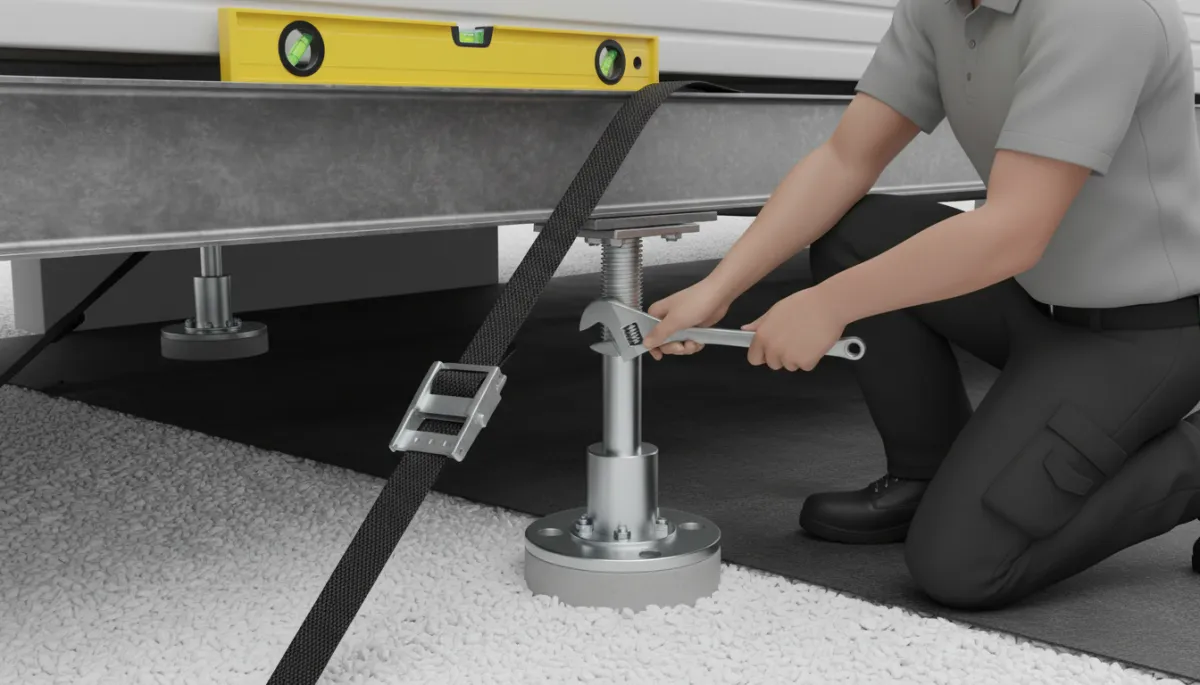
Proper pier adjustments and tie-downs work together to keep your home stable and secure.
Tie-Down Installation: Xi2 Systems & Vertical Tie-Downs/Straps
Unlike site-built homes, mobile homes rely on tie-down systems to anchor them to the ground. These systems—such as Xi2 tie-downs and vertical straps—are designed to resist uplift and lateral movement caused by high winds and storms. When tie-downs are missing, corroded, or improperly installed, the home is more vulnerable to shifting and storm damage, and may not meet local safety codes or insurance requirements.
During an inspection, technicians check the number, placement, and condition of all tie-downs and straps. They can install new Xi2 systems or vertical tie-downs where needed, and replace or tighten existing hardware to ensure your home is anchored securely. This is one of the most important steps in protecting your home and your family during severe weather.
Vinyl Skirting Repair & Installation: Protecting the Crawlspace Perimeter
Vinyl skirting does more than improve curb appeal—it shields the crawlspace from wind, debris, and unwanted animals. Damaged or missing skirting can allow cold air, moisture, and pests to circulate under the home, driving up energy costs and increasing the risk of frozen pipes or damaged insulation. Gaps can also let in leaves and trash, contributing to an unhealthy crawlspace environment.
Professional services include repairing broken panels, securing loose sections, and installing new vinyl skirting when needed. Properly installed skirting is vented to allow controlled airflow, while still providing a clean, finished look around the base of the home and an important layer of protection for everything beneath it.
Corrugated Metal Skirting: Durable Protection with Extra Strength
For homeowners seeking added durability, corrugated metal skirting is a strong alternative or upgrade to vinyl. It resists impacts, weathering, and UV damage more effectively, and can offer a more secure barrier against animals and debris. It also stands up well in areas with lawn equipment, kids, or pets frequently around the home’s perimeter.
Inspections will note any rust, gaps, or loose panels in existing metal skirting. When installing new corrugated metal, professionals ensure proper ventilation, secure attachment, and a neat finish that complements the home’s appearance while adding long-term protection to the crawlspace.
Access Hatch Installation & Repair: Safe Entry to the Crawlspace
Every mobile home needs a safe, secure access hatch to the crawlspace. This hatch allows inspectors and technicians to reach plumbing, ductwork, and structural components when repairs or adjustments are needed. A missing, damaged, or poorly sealed hatch can let in water, pests, and cold air, undermining the protection your skirting and vapor barrier provide.
During an inspection, professionals verify that your access hatch is large enough, structurally sound, and properly weather-sealed. They can repair broken doors, replace rotted framing, or install a new hatch entirely, ensuring convenient access for maintenance while keeping the crawlspace shielded from the elements.
Air Vent Installation & Interior Vent Sealing: Controlling Airflow and Moisture
Proper ventilation is essential for a healthy mobile home. Exterior air vents around the skirting allow fresh air to move through the crawlspace, helping control moisture and prevent mold growth. At the same time, interior vent sealing ensures that conditioned air from your heating and cooling system is delivered inside your living space—not lost to the crawlspace through leaks or gaps.
Inspectors look for blocked, missing, or improperly sized air vents around the home and can install new vents to meet recommended airflow standards. Inside, they may seal unused floor vents or repair leaky duct connections to improve comfort and efficiency. The combination of correct exterior venting and interior sealing helps maintain balanced humidity, better air quality, and lower energy bills.
Crawlspace Debris and Trash Cleanout: Creating a Safer, Healthier Space
Over time, construction scraps, old insulation, broken skirting, and general trash can accumulate beneath a mobile home. This debris not only makes inspections and repairs more difficult, it can also trap moisture, attract pests, and create fire hazards. A cluttered crawlspace is harder to ventilate properly and more likely to hide early signs of leaks or structural problems.
A thorough crawlspace debris and trash cleanout removes these risks. Technicians clear away old materials, dispose of them properly, and leave the area clean and accessible. This service is often paired with vapor barrier replacement, duct repairs, and pier adjustments, creating a fresh starting point for long-term maintenance and easier future inspections.
Duct Work Repair (Crawlspace Only): Protecting Comfort and Efficiency
Many mobile homes have heating and cooling ducts running through the crawlspace. When these ducts sag, separate, or develop holes, your system has to work harder to heat or cool the home, and you may feel uneven temperatures from room to room. Leaky ducts can also pull in dusty or musty air from the crawlspace, reducing indoor air quality and comfort.
During the inspection, technicians examine all accessible ductwork for tears, loose connections, or crushed sections. Crawlspace-only duct repairs may include re-hanging ducts, sealing joints, replacing damaged sections, and adding supports where needed. The result is a more efficient system, improved comfort, and reduced energy costs—all while protecting the mechanical equipment that serves your home every day.
Roof Coatings: Extending the Life of Your Roof and Preventing Leaks
The roof is your mobile home’s first line of defense against rain, sun, and temperature extremes. Over time, metal and membrane roofs can develop small cracks, seams can open, and coatings can wear thin, leading to leaks that damage ceilings, insulation, and wall structures. Roof coatings are a cost-effective way to restore and protect your roof without a full replacement.
As part of a comprehensive inspection, professionals examine the roof for soft spots, rust, loose fasteners, and failing sealant. When appropriate, they can apply specialized roof coatings that seal minor leaks, reflect heat, and extend the life of the existing roofing material. This preventative step helps keep water out, temperatures more stable, and your home’s structure in better condition for years to come.
Column Supports for Awnings: Protecting Add-Ons and Entryways
Many mobile homes feature awnings, carports, or covered porches that provide shade and protect entry doors. These structures rely on column supports to transfer their weight safely to the ground. If columns are leaning, rusted, or set on unstable footings, the entire awning can become unsafe, especially in high winds or under snow loads. In some cases, failing awning supports can even transfer stress back to the home itself.
Inspections include checking column alignment, footings, and connections to beams or roof structures. Technicians can adjust or replace columns, add bracing, and ensure the awning is structurally sound. This protects your vehicles, entryways, and outdoor living spaces while helping to prevent damage to the home where the awning connects.
Downspouts and Gutters: Directing Water Away from Your Home
Water is one of the most damaging forces a home can face—especially around the foundation and crawlspace. Gutters and downspouts collect rainwater from the roof and carry it away from the home’s perimeter. Without them, or when they are clogged or damaged, water can pool around the base of the home, leading to erosion, settling, and moisture problems beneath the structure.
A complete inspection includes evaluating existing gutters and downspouts, checking for leaks, improper slopes, or missing sections. Professionals can install new downspouts, extend them to discharge water farther from the home, and recommend grading improvements where needed. Effective water management is a key part of keeping your mobile home level, dry, and structurally sound over time.
What Makes These Inspections Truly Comprehensive?
The true value of a professional mobile home inspection lies in how all these services work together. Instead of focusing on just one issue—like a soft floor or a drafty room—a comprehensive approach looks at the entire system: from the roof coatings that keep water out, to the gutters that move it away, down to the support piers, tie-downs, vapor barrier, and skirting that stabilize and protect the structure underneath.
By examining each component in context, inspectors can identify the root causes of problems, not just the symptoms. A sloping floor might be tied to settling piers, poor drainage, or a damaged vapor barrier. Musty odors could be linked to duct leaks, inadequate crawlspace ventilation, or debris trapping moisture. A comprehensive inspection connects these dots and provides a clear, prioritized plan to restore and maintain your home’s safety and durability.
Maintaining and Improving Safety, Comfort, and Long-Term Durability
Every service described—crawlspace inspections, vapor barrier repair, support pier adjustments, releveling, tie-down installation, skirting work, access hatch improvements, vent management, debris cleanout, duct repairs, roof coatings, column supports, and downspouts—plays a direct role in protecting your mobile home. Together, they create a safer structure, a healthier indoor environment, and a home that holds its value over time.
For individual homeowners, this means fewer surprises, fewer emergency repairs, and more confidence every time the weather turns rough or a new season arrives. By partnering with qualified mobile home professionals and committing to regular inspections, you’re not just maintaining a building—you’re taking proactive steps to safeguard the place you call home, from the ground up to the roofline.
💡 Pro Tip: Schedule a full mobile home inspection at least every few years, and always after major storms, noticeable settling, or when buying or selling a home.
Schedule an inspection or request an estimate today!
📞Call us at +1 (833) 922-2257
📧Email:[email protected]
🌐Visit:https://desertmobilehomeservices.com
